08/07/2026
what a society finds funny
on dry humor, social ambiguity, and who gets to remain unresolved
I felt mildly autistic spending time around brits this summer. I understood everything but I also became acutely aware of how much signaling I ordinarily use to make myself correctly understood around them. I remember a similar feeling in grad school at Cambridge, especially at the beginning, where in many rooms I felt my presence immediately flattened.
I randomly came across a video a few days ago that helped make sense of it. Horace roots the video in the difficulty some people have recognizing dry humor from Black people. His argument is basically that Black people are often granted two legible social roles: civil rights leader or clown. If you aren’t being loud, performative, or obviously comedic, people default to taking you completely seriously. The possibility that you might simply be quiet, observant, dry, and joking disappears. I realized I may have been experiencing a version of that this summer.
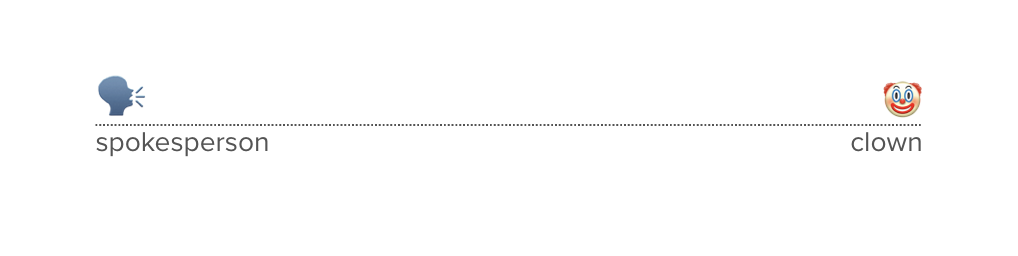
What does a society’s ability to recognize dry humor reveal about who it permits to remain socially ambiguous?
With the premise that human beings are primarily interested in the elimination of uncertainty, it makes sense why someone would put you in a box they feel comfortable interacting with you in. If you are the spokesperson, you are of course legible, but you are also morally serious and can be trusted to explain your difference to them. You’re handing them an identity they can metabolize without having to chew on it too much. If you’re the clown, it’s the same baseline notes - you’re legible and unthreatening - but your role is now to be the entertainer. They know you will participate in jokes about yourself that make everyone else more comfortable. This is the Kevin-Hart-Russell-Peters complex. I don’t blame them, they had to make it work in an industry that only saw them as one-dimensional. They had to preemptively chew the food for an audience that had no appetite for ambiguity.
Much as I wish it did, social ambiguity does not vanish when someone or something unfamiliar enters the room - it just gets transferred to that someone or something as labor. I’ve faced this with the pronunciation of my name since the day we emigrated to Canada. On my first day of school, the school librarian, who was tasked with making my ID card, chose to shorten my name to Aish without my consent because Aishwarya was too difficult to pronounce for her. 30 seconds of discomfort on her end might have saved me years of negotiating my own name. Yesterday in a zoom call with the head of strategy of a large foundation, we were doing introductions. I noticed him almost ask me to go next with my intro, hesitate for a split second, and choose someone else. My immediate suspicion was that he wasn’t sure how to pronounce my name. I don’t think these decisions are intentionally malicious, but I do often wonder if I’ve lost out on opportunities where behind closed doors, I didn’t get picked because someone subconsciously made a prejudiced decision just because they couldn’t be uncomfortable for a hot second.
I’ve been writing this essay for the last three days and as I’ve been chewing on it, I’ve come to realize that humor can be a living indicator (or revealed preference) of a society’s Overton window. Laughter is an instantaneous feedback loop and can reveal what the culture really finds embarrassing and the violations it interprets generously. A society might claim to value entrepreneurship, tolerate discomfort, appreciate new values; but it all comes crashing down the moment a room collectively laughs at a joke that reveals their exact threshold for said discomfort.
During this process of critique, I’ve actually really come to appreciate the parameters that allow for dry humor with Brits. They will say “not bad” when they really mean excellent, “quite good” when disappointed, or “interesting” when they mean absolutely deranged. You have to be in the system to have shared context and assumptions.
What this really means is that dry humor is evidence of extraordinarily dense coordination. This level of shared context requires a specific type of social infrastructure that is partly an emergent property of centuries of social hierarchy, cultural continuity, and inherited etiquette. People are expected to know exactly how to behave, what they’re permitted to say, and what can/must remain unsaid.
Inherited legibility is unevenly distributed and those who possess it are automatically privileged to interpretive slack. You can be ambiguous in language because the rules of your social life have been made legible for you. It’s kind of like a really really nice prison you don’t realize you’re in because participation in social order is a low-activation-energy endeavor. The privilege of dry humor is the privilege of not having to manage everyone else’s interpretation of you.
Power and Institutions
I have now started to wonder how this translates to power and institutions, or rather power in institutions. Institutions are in many ways smaller-scale societies. To a certain extent, the point of an institution is precisely to have a shared set of values, contexts, assumptions, so something whole that might be greater than the sum of its parts can emerge.
Ideally, this leads to truth and beauty and innovation (1). I absolutely loved my time at Cambridge and am so inspired by the devotional emergence from me it allowed for. It is a beautiful thing when people share enough assumptions that meaning can remain implicit. There are people who love and celebrate the history of Cambridge, and enough shared affection can make this history safe material for comedy. But the same history contains things that do not feel remotely neutral to everyone in the room: Trinity held bonds in the East India Company, while Corpus Christi, Caius, Jesus, King’s and Pembroke held South Sea Company investments during its involvement in the Atlantic slave trade. What can be rendered harmlessly funny depends in part on where you stand relative to the history (or institution) being joked about.
I promise this does not keep me up at night. The point here is that - what an institution finds funny - reveals the power structures it has learned to take for granted.
Power allows for the ability to remain multidimensional in public. It buys you the benefit of the doubt because in reality, power buys time. Power lets you be understood slowly. Power permits inconsistency, ambiguity, experimentation, silence, and failure without instantly collapsing your identity into a verdict. Power gives you control over the tempo of the entire room (or institution). How fast or how slow things move depends on those with more power. They may also get to determine how quickly something or someone must become legible.
The most important point I want to make is that holding uncertainty is not the same as celebrating chaos! I am not arguing that everything deserves infinite patience or interpretation. I am saying that prior legibility ought not be the price of entry. Just because you do not understand something or someone does not mean it is unimportant. Just because something is not inside your Overton window does not mean it belongs outside the institution’s.
Notice what your institution finds funny. You may be examining the edges of its real Overton window.
–
Before exploring this theme, I thought that the deepest form of belonging was in being understood. But it’s not. The deepest form of belonging is in being allowed to be uninteresting.
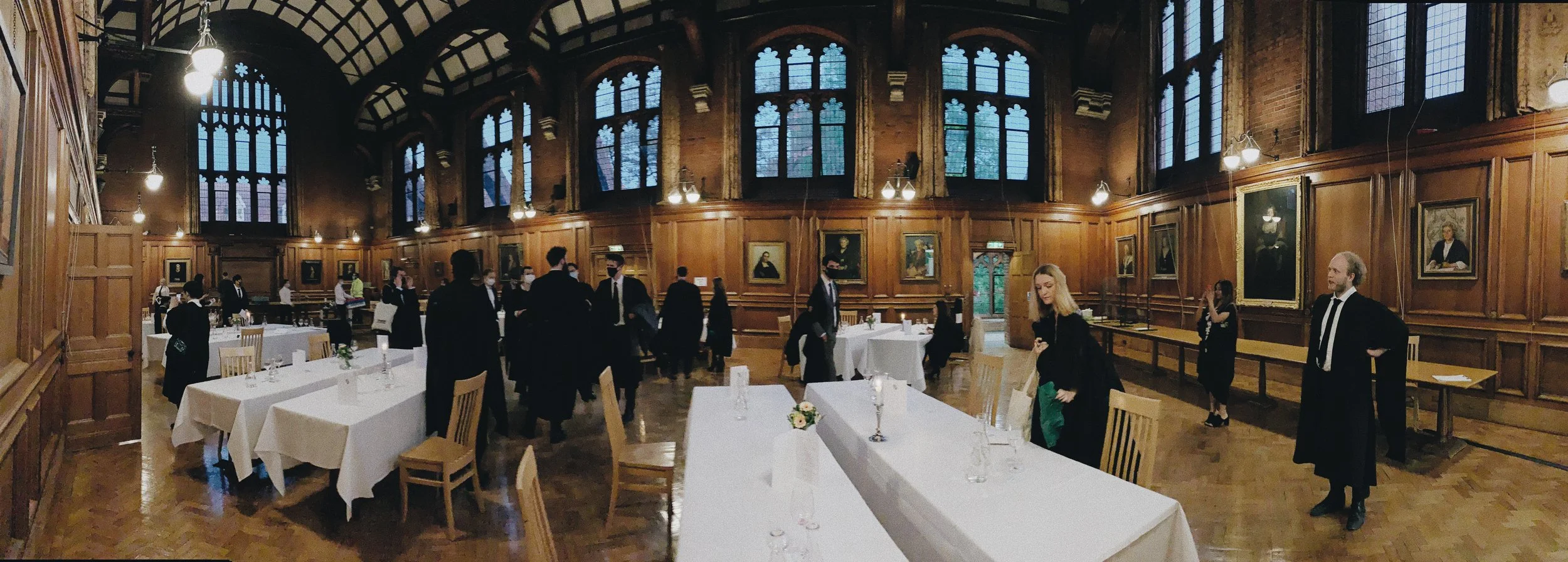
dinner @ girton college, cambridge
Notes
The dark side of inherited legibility is that you inherit the terms of the system too. You get interpretive slack, optionality, social ambiguity, but you lose failure privilege. Separate essay on failure privilege potentially coming soon. A Case for Strategic Ignorance by Design touches on some aspects of this.
PROOF OF LIFE 04 · © 2026
follow on twitter for new essays.
sign up for the mailing list for occasional updates.